

Good conservation work asks us to pay attention, not only to the land itself but also to the history, human relationships, and living systems that make a place what it is.
That understanding guided an important change at one of our conservation properties in the Tŝilhqot’in region of British Columbia. The site had been known as the Elkin Creek Nature Preserve, named for the creek that flows through it, which was named after a recent settler. But as we reflected more deeply on the place and its significance, we recognized that the name also carried forward a colonial pattern of assigning white settler people's names to Indigenous lands.

This is not just any protected property. It is a very special conservation area with rare spawning habitat for Chinook salmon, making it ecologically important in a direct and tangible way. Places like this support the life cycles that healthy watersheds depend on. They help sustain biodiversity and protect the delicate connections between water, fish, wildlife, and surrounding habitats.
Because this sanctuary lies in the territory of the Xeni Gwet’in First People, we knew it was important to take a more respectful approach. In consultation with several Xeni elders and First Nation advisors, we asked them for a Tŝilhqot’in name that would better honour the Nation whose territory this is and reflect something essential about the land itself.

The word Jaŝ, meaning Chinook salmon, was the perfect fit. It speaks to one of the sanctuary’s most remarkable ecological features and anchors the place more meaningfully in its own landscape.
We said goodbye to 'Elkin Creek' and moved forward with the name Jaŝ Chinook Salmon Nature Sanctuary. New signs were installed at the sanctuary in May 2021, and we have used this name ever since.
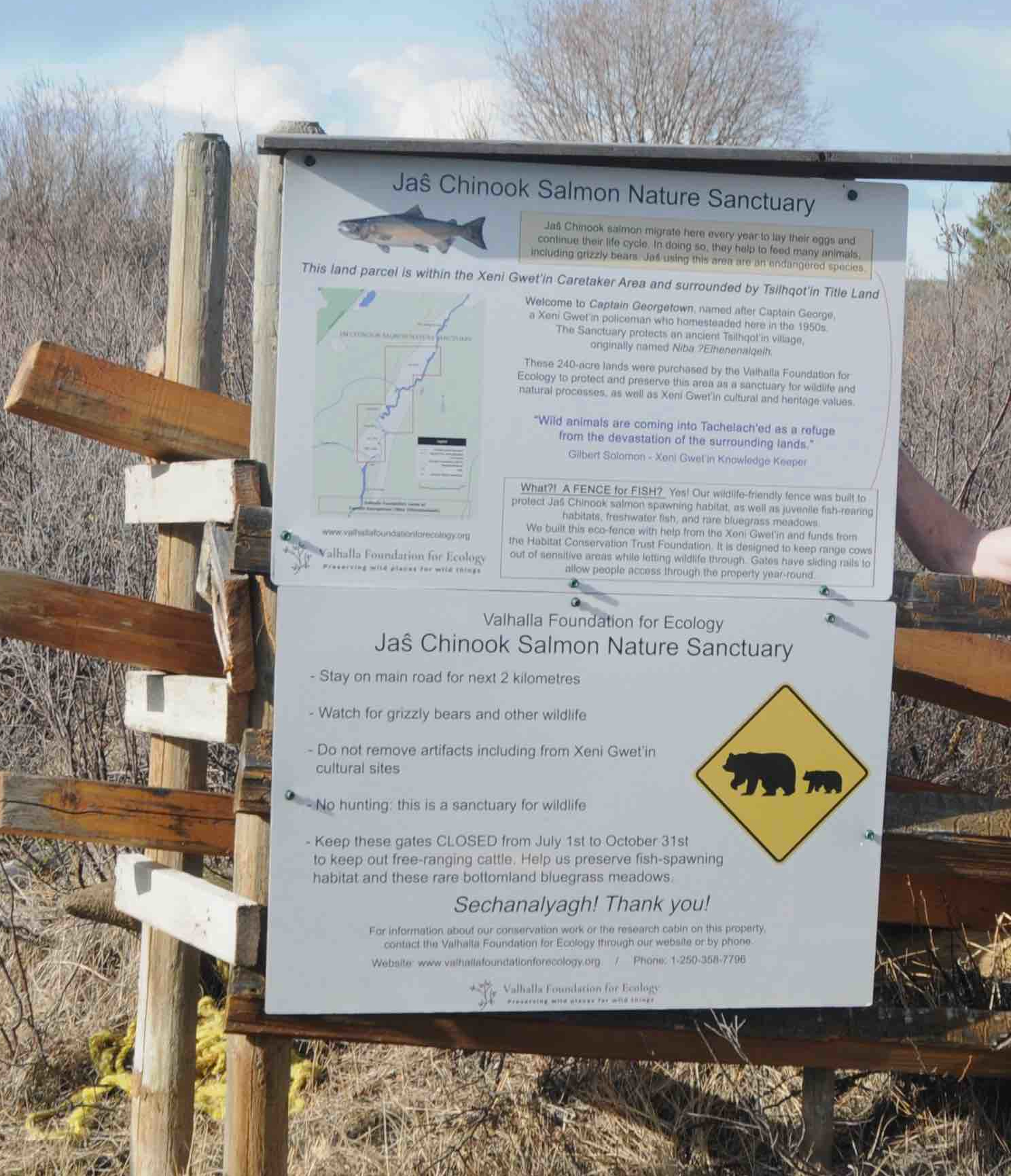
We are particularly grateful to Xeni Gwet’in elder Alice Williams for helping provide this more culturally appropriate name. For us, this change was part of a larger responsibility: to protect ecologically important places with care, and to do that work in a way that shows respect for the people, species, and relationships that make those places matter.
Every protected place carries a story like this one. Conserving land is about safeguarding habitat, but it is also about making thoughtful choices that reflect respect, humility, and long-term stewardship. That is the work we remain committed to doing. If you would like to support us in this kind of endeavor, please support us with a donation. Every bit helps.